#dymola
Projects
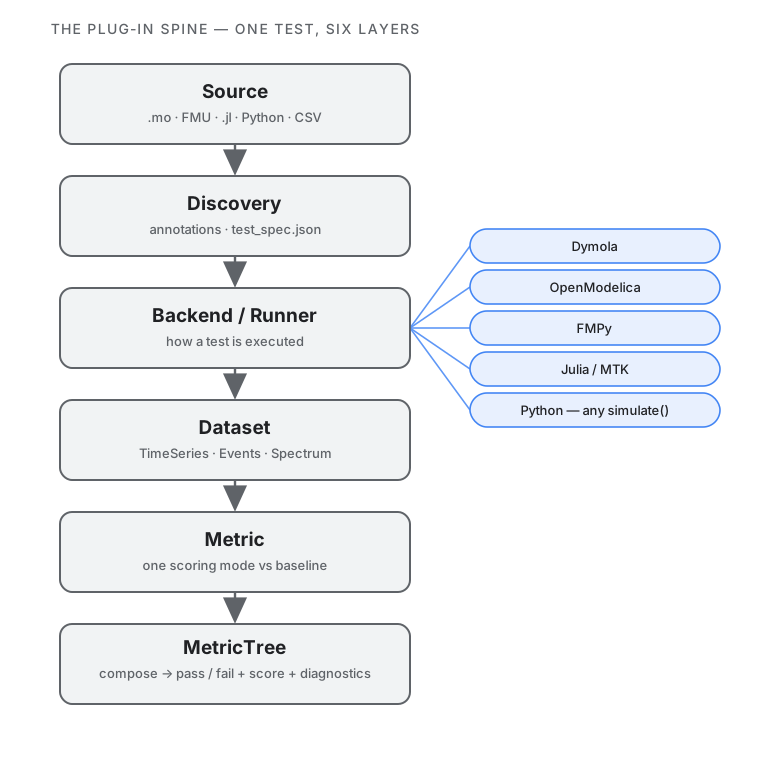
DSTF — Dynamic Systems Testing Framework
ActiveA backend-agnostic harness for regression-testing time-dependent system behavior — five simulators, six tolerance-based comparison modes, and an interactive report that doubles as the authoring surface for acceptance criteria.
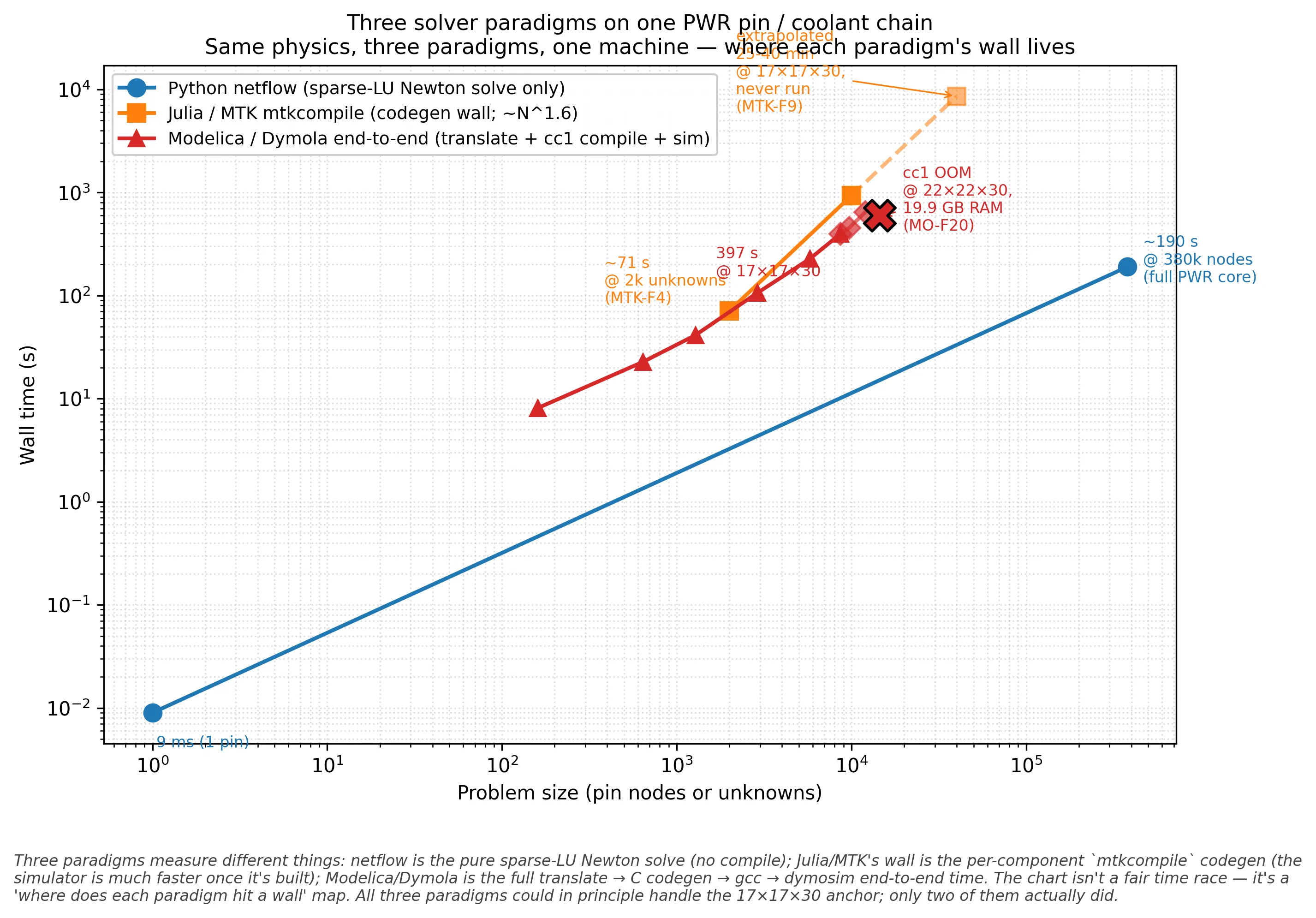
soul-test-netflow: three thermal-fluid paradigms on one PWR pin
ArchivedThe same nuclear-reactor pin / coolant-loop physics, built three different ways on one machine — by-hand Python, Julia's ModelingToolkit, and Modelica/Dymola. The comparison across the three is the deliverable.
TRANSFORM
ActiveAI-assistedA Modelica library for system-level dynamic simulation of nuclear and other thermal-hydraulic energy systems — fluid networks, heat transfer, heat exchangers, nuclear kinetics, media, and controls in one reconfigurable package. Started at ORNL in 2017, still moving, Apache-2.0.
Writing
DSTF: regression testing for behavior that moves
A backend-agnostic harness for regression-testing time-dependent system behavior — five simulators, six tolerance-based comparison modes, and an interactive report that doubles as the authoring surface for acceptance criteria.
The same physics on Modelica + Dymola: reaching the full PWR assembly
The third episode of soul-test-netflow — Modelica 4.1 running in Dymola, the mature commercial simulator. The 17×17 PWR fuel assembly that Julia could only extrapolate, completed in 397 seconds end-to-end.
Three walls, one paradigm: the bottlenecks are ecosystem gaps, not the math
The capstone of soul-test-netflow — same nuclear-reactor pin physics, three different software stacks. Each one hit a wall at a different scale. The claim worth staking is that the walls are ecosystem-shaped, not paradigm-shaped.